
Vampires have incredible vampire powers as supernatural beings that survive by consuming the life force of living creatures, typically blood. The need for vampires to feed on this life essence can be different in three aspects: frequency, amount, and type. In terms of frequency, a vampire could have an unquenchable hunger, desiring life essence for every second of each waking moment, or they could have a weak appetite, needing to feed on rare occasions. For the amount of life force, a vampire could require such large quantities that it could mean certain death for their target, or they could need only a small amount, like a mosquito bite that is barely noticeable. The type of life force vampires need also differs, ranging from freshly drained from a specific specimen, to packaged product, like rare steak or blood packs.
Vampires can be undead or living persons, and thus possess the strengths and weaknesses of either.
Here are the top 10 powers that most, if not all, vampires have.

Being clinically dead, the brains and bodies of vampires are immune to most things that affect living creatures. They lack the physical weaknesses of human beings, such as vulnerability to diseases, as well as the need to perform normal bodily functions like sleeping and eating human foods. A regular human cannot survive for more than a month without food. Unlike humans, it is believed that a vampire can survive seemingly forever with no food other than life essence, such as blood.
Vampires may be able to sleep and even dream, but they do not need to do so. For humans, it is clear that progressive sleep deprivation results in considerable worsening deficits in concentration, perception, mental processes, and even loss of cognitive and motor functions. Some serious problems associated with prolonged sleep deprivation are increased risk of heart attack, high blood pressure, diabetes, heart failure and even stroke. Other potential problems include obesity, depression, and premature aging. Vampires do not experience the side effects of sleep deprivation because any resulting damage to their bodies would be healed by their rapid regenerative ability.

Vampires are incredibly strong, exceeding the capability of what any normal human being can achieve with training. In Dracula, it was written that vampires have the strength of twenty men. Some have said that vampires possess ten times the strength as they had when they were alive. Vampires can perform supernatural feats of strength and are able to lift extremely heavy objects, such as cars, trucks, buses, and other vehicles of great size.

Vampires are able to move at a near instantaneous speed, such that the naked eye perceives it as teleportation. They are immensely faster than any human being could expect to achieve in their lifetime, even with intense training. An ordinary human being who tried to match the speed of a vampire would burn from the friction of their body colliding against the latent air particles in the atmosphere. This is not a problem for the vampire as they possess accelerated healing abilities. Any ill effects suffered as a result of their high speeds would immediately be healed.
Vampires are also very agile, meaning that they can respond and adapt to changes in their environment at a rapid pace. They are able to shift the position and configuration of their body efficiently and quickly. This requires a combination of strength, endurance, balance, coordination, speed, and reflexes. In short, vampires have drastically accelerated reaction speed, which can appear instantaneous to the naked eye. Vampires can dodge, sprint, do gymnastic feats, catch falling objects, and block projectiles effortlessly. Because of their supernatural physical constitution, they do not experience exhaustion from such exertion.

Vampires have very heightened senses, ensuring that they are able to see, hear, smell, taste, and feel more acutely than human beings. Vampires can observe from several kilometers away, track objects that are too swift for the natural eye, pick up a conversation from a far distance, and even detect the faintest vibration in the air, ground or water, giving them a tactical advantage over their enemies.
Because of their strong perception, vampires are able to maintain a clear sense of reality at all times, which means that attempts to deceive vampires with mental or optical tricks would not work.

Vampires can regenerate their bodies at an accelerated rate. Injuries that prove fatal for human beings may be mere temporary setbacks for vampires. They are able to survive severe blood loss, extreme burns, and normal bullet wounds. Mild to moderate injuries heal nearly immediately, appearing as though they had never taken place. Simply put, vampires can recreate damaged or missing tissues, fractured bones, organs, limbs, and even cellular and genetic damage. The result is that they are able to maintain peak physical condition, giving them miraculous stamina and vitality. Because vampires are able to return to a healthy state at will, they can retain a youthful appearance and long lifespan. The rate and extent of healing that vampires are able to achieve depends on the type of vampire. The most powerful vampires can immediately regenerate any lost limbs, whereas other weaker vampires can only do so by putting the limb back in its place. The blood of vampires may be so strongly enriched with healing properties that it can be used to save others from the brink of death.
Despite their strong healing powers, vampires are not immune to illnesses and poisons. Long-term starvation of vampires can result in significant weakening of their healing. Destroying the heads of vampires and staking their hearts are one of few ways to ensure that vampires do not regenerate, thus ensuring the permanence of their deaths.

Vampires are able to withstand a great amount of pain. They have a high pain threshold, which is the point at which a subject starts to feel pain from an external stimulus.
It is common for humans to pass out because of extreme pain. Many have gone through such an excruciating experience and the cause is due to a sudden reduction in blood supply to the brain. What does pain have to do with blood supply to the brain? Well, a sharp, intense pain can result in a temporary disruption to the functioning of the ANS (Autonomous Nervous System), which controls one's heart rate and blood pressure. The stress to the system leads to the phenomenon of fainting.
Because vampires have a supernatural constitution and ability to rapidly regenerate any damage to their bodies, they do not experience pain trauma to the same degree as humans do. Depending on their power level as well as the physical, psychological and genetic characteristics they had before they turned, the pain threshold of each vampire will be different accordingly. For true vampires, they may be impervious to all sources of pain.

Vampires can turn other living creatures into vampires by infecting them with their vampire blood. Humans are the most common targets, but there are also zombies, werewolves, and even witches that can become vampires as well.
The process of conversion typically requires a specific set of actions, such as drinking all of the blood from the target and replacing it with the blood of the vampire. It has also been said that the target has to first die and thereafter awaken as an undead and feed on fresh blood before full conversion can be achieved.

Assuming there are no obstructions, vampires can generally modify, control, and otherwise manipulate the thoughts of an intended target. They are able to induce an unconscious state, suppress or change memories, create or eliminate phobias, force a state of agreeableness, set remote commands, alter perception, and draw out truths. With this power, vampires can heal or harm to an effective degree. This can be considered a powerful form of hypnosis.
By looking into the vampire’s eyes, the brain of the target is forced to enter a desired state, creating lasting changes in emotions, feelings, and memories. The precise length of time and effectiveness of the intended manipulation depends on the vampire’s skill level as well as the degree of barriers in place that can impede the access to the target’s mind. People who possess certain artifacts and those with unusually strong-wills can prevent the vampire’s commands from taking root. Since visual contact is necessary for the manipulation to work, avoiding the vampire’s gaze can also serve as an effective deterrent.
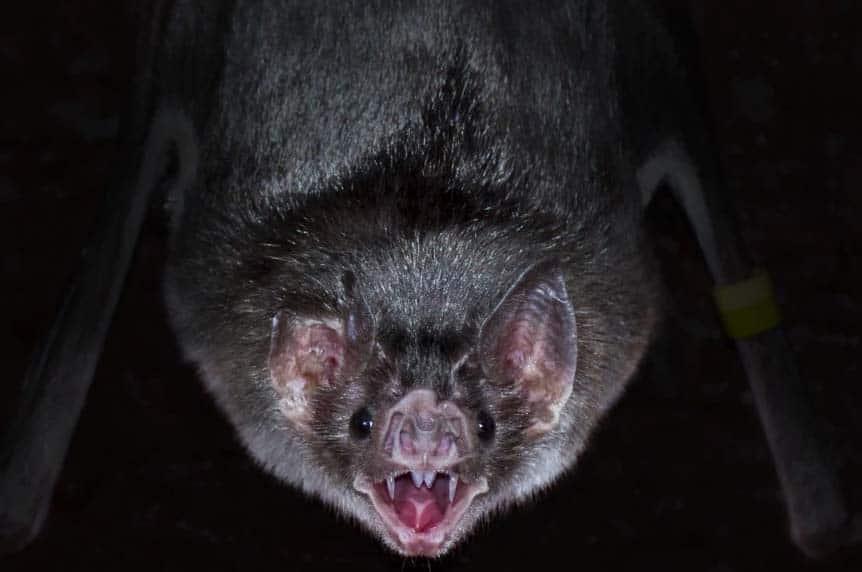
It is said that Count Dracula from Bram Stoker's 1897 gothic horror novel, Dracula, can shapeshift at will, becoming either tiny or massive. Dracula can turn into a bat, a wolf, a large dog or a fog/mist. When the moon comes out at night, the vampire is able to move as elemental dust within rays of moonlight. He is able to go through small cracks or crevices in walls and floors while maintaining his human form or in a vaporous form.
Mina Harker from the comic book series, The League of Extraordinary Gentlemen, is a vampire who can also transform herself into a scary swarm of blood-sucking bats.
By transforming into a cloud of the bats, vampires are able to disperse themselves across a wide area, enabling them to spy on or scout out their enemies. They are usually able to maintain control over their bat fragments and can reform themselves at any time, as long as at least one bat survives. As such, this is a powerful defensive maneuver, making the vampire very difficult to hurt, capture or kill. Hunting down each and every one of the bats is almost impossible using regular methods.

Vampires have a particularly strong bite as a result of their prominent fangs and supernaturally strong jaw muscles. This allows them to sink their teeth into their victims and drain them of their life essence.
Do you know of any other vampire powers? Share them below!
NOW I KNOW I AM SO HAPPY THANK YOU ☺